
Dubai Off-Plan Payment Plans Explained: 60/40, 80/20 and 1% Monthly
Updated: 7 min read
In most markets, financing an off-plan purchase means a bank, a mortgage and an approval process. In Dubai, the developer is the lender — and the loan is interest-free. You pay the price down in installments across construction, with no arrangement fees, no eligibility checks and no income documentation. That single feature is why off-plan dominates the market, and why choosing the right plan is a strategy decision rather than paperwork.
This guide breaks down the structures you will actually see on 2026 launches — 60/40, 80/20, 50/50, the 1% monthly plan and post-handover — and shows how each one distributes your capital and risk across the timeline. Every format below is a real developer structure; the right one depends entirely on whether you are an end-user, an assignment trader or a yield investor.
Why Payment Plans Beat Mortgages for Most Off-Plan Buyers
Dubai developers finance you directly: installments at 0% interest, no arrangement fees, no eligibility checks, no age limits, no income documentation. For non-residents — whose UAE mortgage loan-to-value on off-plan caps out around 50% — the developer plan is almost always the cheaper and simpler route into the market.
The trade is structure. Each plan distributes risk and capital differently across the construction timeline. The families below cover almost every launch you will see in 2026, and the difference between them can mean tens of thousands of dirhams in capital deployed years earlier or later.
The financing is the product
A 0% developer plan is not a discount bolted onto the sale — it is the sale. The cost of financing is embedded in the list price, which is why the same unit on a longer post-handover plan sometimes lists slightly higher.
The Standard Structures, Side by Side
Read any plan as 'X during construction / Y at or after handover'. The first number is how much capital you commit before the keys exist; the second is what waits until completion. Here are the common formats and how much of your money each one puts to work during construction:
- 60/40 — the workhorse: 10-20% down, the rest of the 60% across construction milestones, 40% at handover. Balanced risk, moderate cash commitment.
- 80/20 — front-loaded: common on high-demand launches; you deploy more capital earlier, often in exchange for sharper launch pricing.
- 50/50 — half across construction, half at completion: keeps maximum capital in your hands until the asset is physically real.
- 70/30 and milestone variants — most master developers, including Emaar at communities like The Heights Country Club in Dubai South, run construction-linked plans in this family.
Front-load only if you will hold
An 80/20 plan rewards you with keener launch pricing, but it ties up capital early. If your strategy is an assignment exit before handover, that money is working against your return — a 50/50 or 1% monthly keeps it liquid for longer.
The 1% Monthly Plan: Danube's Signature
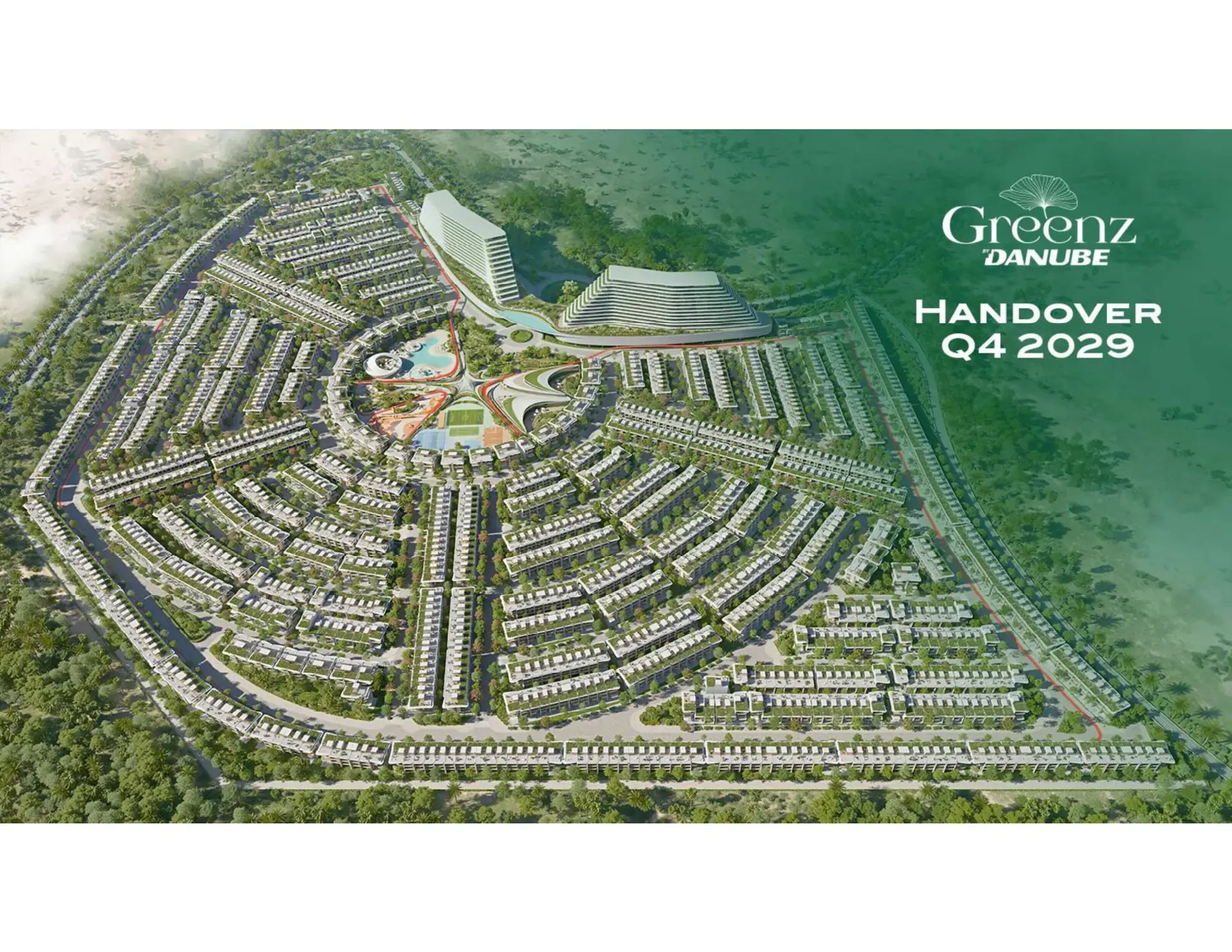
Danube Properties built its brand on the 1% monthly plan, and Greenz in Dubailand's Academic City corridor runs it today: roughly 10% down, then 1% of the purchase price every month. On a AED 1 million unit that is AED 10,000 a month — comparable to rent on a similar apartment, except every payment builds equity instead of disappearing.
- 01
Booking
~10% + 4% DLDDown payment plus the 4% DLD fee to reserve the unit and register on Oqood.
- 02
Months 1-30
AED 10K/mo1% of the price every month — about AED 10,000 — paid like rent while construction runs.
- 03
30-40% paid
~Month 20-30The resale threshold for an assignment exit is reached slowly on this plan, not in a burst.
- 04
Handover
balance dueRemaining balance settled or rolled into a post-handover tail, plus DEWA deposit and keys.
The appeal is cash-flow smoothing; the discipline required is duration. At 1% monthly you reach the typical 30-40% resale threshold more slowly than on a milestone plan, which matters if an early assignment exit is part of your strategy. For end-users and salary-funded investors, it is the lowest-friction entry in the market.
Post-Handover Plans: Let the Rent Pay
Post-handover plans push 20-60% of the price into the 2-5 years after you receive keys. Because the unit can be rented immediately, tenant income offsets the remaining installments — the closest thing Dubai offers to a self-funding acquisition. DAMAC frequently structures plans of this type across its master communities, including launches like DAMAC Islands 2.
It reduces the carry — it rarely erases it
Run the math conservatively: a unit yielding 7% gross covers roughly half of a typical post-handover installment schedule, not all of it. The plan lightens your monthly carry; it almost never eliminates it. Budget for the gap.
Payment Plan vs Mortgage: The 2026 Numbers
A UAE mortgage in 2026 prices from roughly 4% per annum, requires about 50% down for non-residents on off-plan, and adds 0.25% loan registration plus valuation and arrangement fees. A developer plan costs 0% — the financing is baked into the list price. For most off-plan buyers the decision point only arrives at handover, when any remaining balance can be refinanced into a mortgage if needed.
Match structure to strategy: end-users optimizing total cost should front-load; investors planning an assignment sale want to hit 30-40% paid quickly, then stop; yield investors should shortlist post-handover plans first.
Want plans like these on real, available units? See our hand-picked off-plan launches with verified prices, developers and handover dates.
Browse off-plan projectsThree Questions to Ask Before You Sign
Payment plans are marketing instruments as much as financial ones. Get these answers in writing before reserving:
- What triggers each installment — calendar dates or verified construction milestones? Milestone-linked is safer if the project slips.
- Is any post-handover portion registered against the title? It affects your ability to resell or refinance before the plan ends.
- What is the default process if you miss a payment? Dubai law scales deductions to construction progress, but contracts add notice and cure periods worth knowing in advance.
Missing a payment is recoverable — if you move early
If you fall behind, the developer serves notice through the DLD and you typically get a 30-day cure period before any deduction. Beyond that, deductions follow a legal sliding scale tied to construction progress. Communicate early; restructuring is common and far cheaper than default.
Not sure which structure fits your capital and timeline? We will map plan to strategy on any project you are considering — free, no obligation, in your language.
Frequently asked questions
Yes — 0% interest is standard across developer plans. The financing cost is embedded in pricing, which is why identical units on longer post-handover plans sometimes list slightly higher.