Best Areas to Buy Off-Plan Property in Dubai in 2026
Updated: 8 min read
Dubai does not have one property market — it has a dozen, priced along an infrastructure gradient. Established prime such as Downtown and Palm Jumeirah trades at AED 2,500-5,000 per square foot, while the growth corridors of Dubailand and Dubai South launch at AED 1,000-1,600. That spread is the entire strategy question: pay for scarcity and liquidity today, or buy growth ahead of the infrastructure that will reprice it.
Two facts frame every district decision. Dubai logged record transaction values through 2025, and the population is approaching 4 million on its way to the 2040 plan's 5.8 million — demand that reaches every tier of this map, just not at the same speed. Below are the six zones where serious off-plan capital is concentrating in 2026, with realistic entry levels and the investor profile each one actually suits.
How to Read Dubai's Map in 2026
Price per square foot is the fastest way to place any district on the curve. It tells you where the infrastructure already is — and where you are paying for it to arrive. Here is the indicative off-plan range across the six zones in this guide:
AED/sqft
The mirror image of price is yield. The cheaper growth corridors carry the highest gross yields in the city, while prime trades liquidity and prestige for a lower cash return. Map the two together and each district's role in a portfolio becomes obvious:
% gross
Map capital to district, not the reverse
Decide your mandate first — yield, liquidity, or long-horizon growth — then pick the zone that serves it. Chasing a headline development in the wrong district for your strategy is the most common off-plan mistake.
Downtown Dubai: Branded Trophy Territory
Downtown is Dubai's deepest resale market and its branded-residence epicenter. Off-plan pricing runs AED 2,500-4,500 per square foot, with branded product at the top of the band. Current landmark launches include Mercedes-Benz Places by Binghatti — the first Mercedes-Benz residences anywhere in the world — and Mr. C Residences, carrying the Cipriani family's hospitality name.
Suits: capital preservation, lock-and-leave international owners, and investors who prioritize exit liquidity over headline yield. Expect 5-6.5% gross, with branded stock adding a rental premium on top.
Dubailand: The Volume, Value and Yield Engine
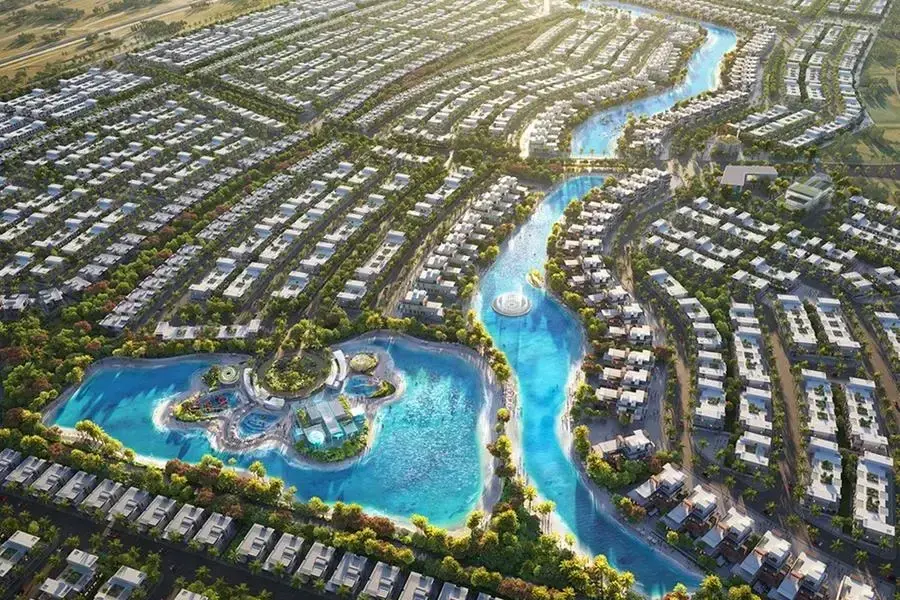
Dubailand is where affordability and yield meet in 2026: AED 1,000-1,600 per square foot and gross yields of 7-9%, the strongest in the city. The pipeline is also the most diverse — DAMAC Islands 2 brings water-themed villas and townhouses, Ghaf Woods by Majid Al Futtaim wraps apartments in a genuine forest microclimate, Tilal by Binghatti targets design-led mid-market buyers, and Greenz by Danube adds a 1% monthly payment plan near Academic City.
- 7-9%
- Gross yield
- AED 1,000-1,600
- Price / sqft
- AED 600K
- Studio entry
- AED 1.8M
- Townhouse from
Highest in Dubai
Growth-corridor value
From ~600-750K
Villa living at townhouse money
Suits: first-time investors, yield-focused portfolios, and families upgrading to villa communities at townhouse money. Entry starts around AED 600,000-750,000 for studios, with townhouses from roughly AED 1.8 million.
Palm Jumeirah and Dubai South: Opposite Ends of the Curve
Palm Jumeirah is the scarcity play — no new land, global recognition, AED 3,000-5,000 per square foot. Boutique launches like Passo Residences trade on beachfront supply that cannot be replicated; yields run 4.5-5.5% on annual leases but jump materially on short-term lets.
Dubai South is the opposite trade: AED 900-1,400 per square foot beside the USD 35 billion Al Maktoum International Airport expansion, the largest aviation project on earth. Emaar's The Heights Country Club anchors the residential momentum. Buy here for 5-10 year appreciation as the airport, logistics hub and surrounding employment base build out.
Two clocks, one curve
Palm Jumeirah prices scarcity that already exists — you pay today for supply that can never grow. Dubai South prices growth that has not arrived yet — you buy ahead of the infrastructure and wait for it to reprice the land. Same curve, opposite ends.
Jebel Ali Village and Abu Dhabi's Yas Corridor
Jebel Ali Village is a quiet repricing story: an established, green, low-rise pocket on the Sheikh Zayed Road spine between Dubai Marina and Dubai South. Lunaya by Zaya brings boutique new residences to a district with mature infrastructure and a structural shortage of fresh product — a rare combination at mid-market pricing.
Across the border, Abu Dhabi's Yas corridor offers diversification at lower entry points with 7%-plus achievable yields. Sobha Villaments near Yas Island — villa-apartment hybrids — captures the capital's strongest leisure-district tenant demand.
Established vs Emerging: The Core Trade-Off
Strip the six districts down and they sort into two camps. Established prime buys you liquidity and a lower-volatility hold; emerging corridors buy you yield and appreciation upside in exchange for a longer infrastructure wait. Most balanced portfolios hold some of each:
See live off-plan launches across every district on this map — Downtown branded towers to Dubailand yield plays — with verified prices, developers and payment plans.
Browse off-plan projectsQuick Match: Which Area Fits Your Mandate
Map your capital to the district, not the other way around:
- Maximum yield per dirham: Dubailand (Greenz, Tilal, Ghaf Woods) at 7-9% gross
- Capital preservation and liquidity: Downtown branded stock (Mercedes-Benz Places, Mr. C Residences)
- Long-horizon growth: Dubai South (The Heights Country Club) on the airport expansion
- Scarcity plus short-term rental income: Palm Jumeirah (Passo Residences)
- Quiet value on mature infrastructure: Jebel Ali Village (Lunaya by Zaya)
- Cross-emirate diversification: Abu Dhabi's Yas corridor (Sobha Villaments)
Tell us your budget and goal and we will shortlist the right district and projects for you — free, no obligation, in your language.
Frequently asked questions
For cash yield, Dubailand and Dubai South lead at 7-9% gross. For total return including appreciation, Dubai South's airport-driven growth case is the strongest medium-term story in the market.